应用
Catalytic Trifluoromethylthiolation Using N-(Trifluoromethylthio)phthalimide
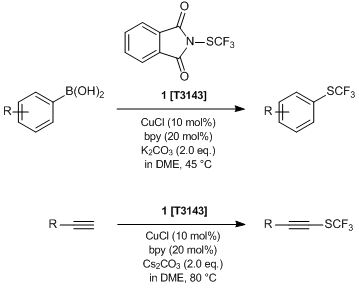
Typical Procedure (Reaction of 1 with boronic acids)3):
CuCl (4.0 mg, 0.04 mmol, 10 mol%), dry boronic acid (0.4 mmol, 1.0 eq.), dry K2CO3 (111 mg, 0.8 mmol, 2.0 eq.), 2,2’-bipyridine (12.5 mg, 0.08 mmol, 20 mol%) and N-(trifluoromethylthio)phthalimide (103.8 mg, 0.42 mmol, 1.05 eq.) are placed into an oven-dried Schlenk tube equipped with a stirring bar. The tube is sealed with a rubber stopper, evacuated and back-filled with dry argon (three times). Dry, freshly distilled and degassed DME is added by a syringe and the reaction mixture is stirred at 45 °C for 18 h. The reaction mixture is cooled to room temperature, diluted with diethyl ether (5 mL), and filtered through a short plug of silica, eluting with additional diethyl ether (50 mL). The filtrate is concentrated; pentane (10 mL) is added and concentrated again for removing residual DME. The resulting residue is purified by chromatography (pentane―diethyl ether) to provide the desired product.
References
- 1)Trifluoromethylsulfenylation of masked carbonyl compounds
- 2)N-Trifluoromethylthiophthalimide: a stable electrophilic SCF3-reagent and its application in the catalytic asymmetric trifluoromethylsulfenylation
- 3)Direct catalytic trifluoromethylthiolation of boronic acids and alkynes employing electrophilic shelf-stable N-(trifluoromethylthio)phthalimide
PubMed Literature